Hydroponic farming in India: what it is, what it costs to run, and who it suits
Most hydroponics content online is written by people selling kits. This one is written by people who grow lettuce and berries for a living.
Key takeaways
- Hydroponics replaces soil with a nutrient solution, but the greenhouse around it does most of the heavy lifting in Indian conditions.
- Leafy greens, herbs, cherry tomatoes, cucumbers and berries are where the economics tend to work. Staples rarely do.
- Electricity, labour, seedlings and nutrients are the big running costs; water treatment surprises a lot of people.
- Selling is harder than growing. Line up buyers before you build.
- A small trial bay teaches more than any course.
Hydroponics is simple to describe and harder to run well. You grow plants without soil, feeding the roots a measured solution of water and minerals. That's it. Everything else, the greenhouse, the cooling, the dosing pumps, exists to keep that solution and the air around the plant inside a narrow band.
We have been growing this way since 2015, today across more than 250,000 sq ft in Manesar and Nashik. This guide is the version we wish someone had handed us at the start.
How does hydroponics actually work?
Roots need three things from soil: water, nutrients and oxygen. Hydroponics supplies all three directly.
- Water and nutrients come as one solution, mixed to a target strength (measured as EC, electrical conductivity) and acidity (pH).
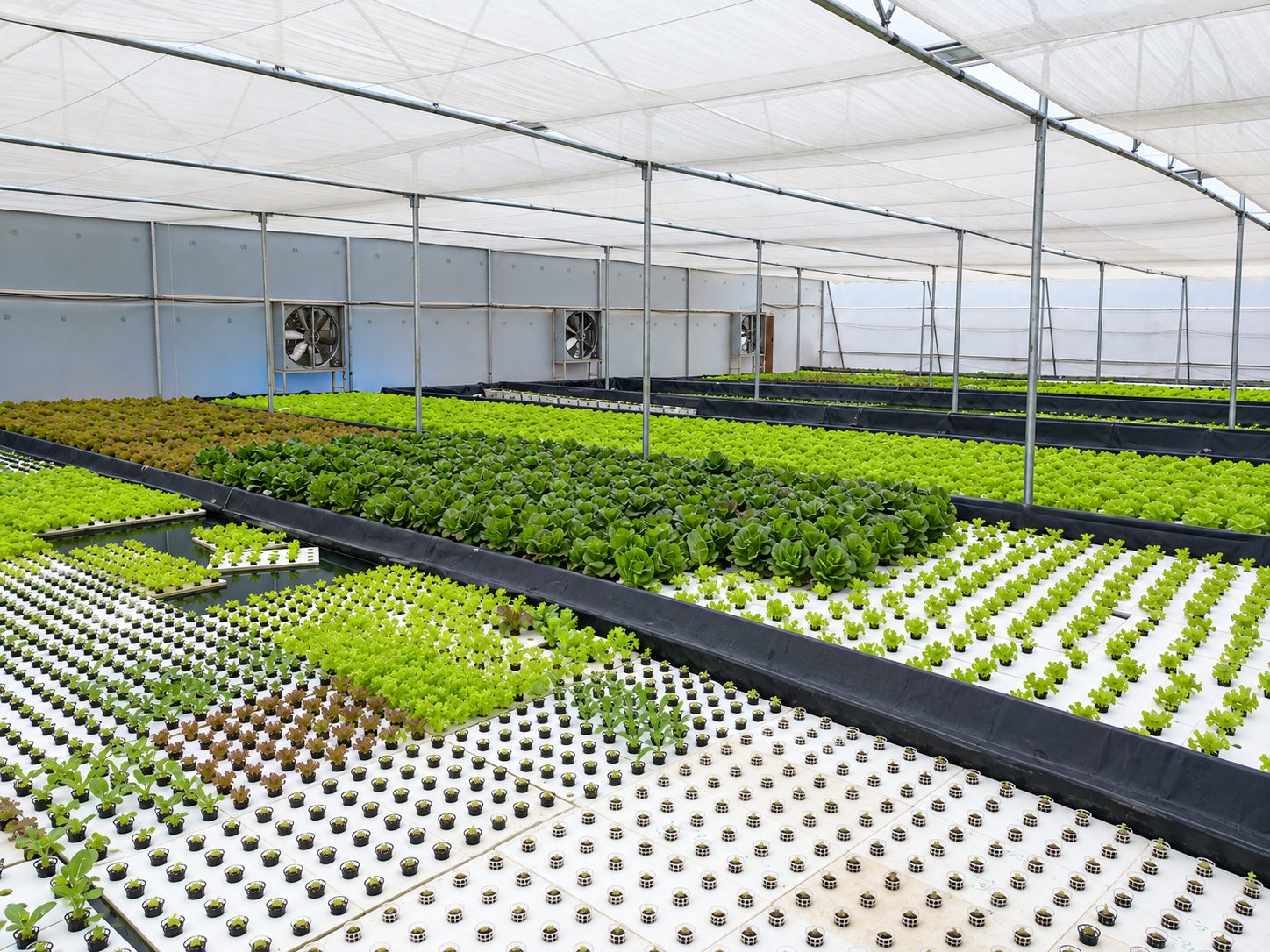
- Oxygen comes from keeping roots partly in air, as in NFT channels, or by aerating the water, as in deep-water beds.
- Support comes from a float, a channel or an inert medium such as cocopeat.
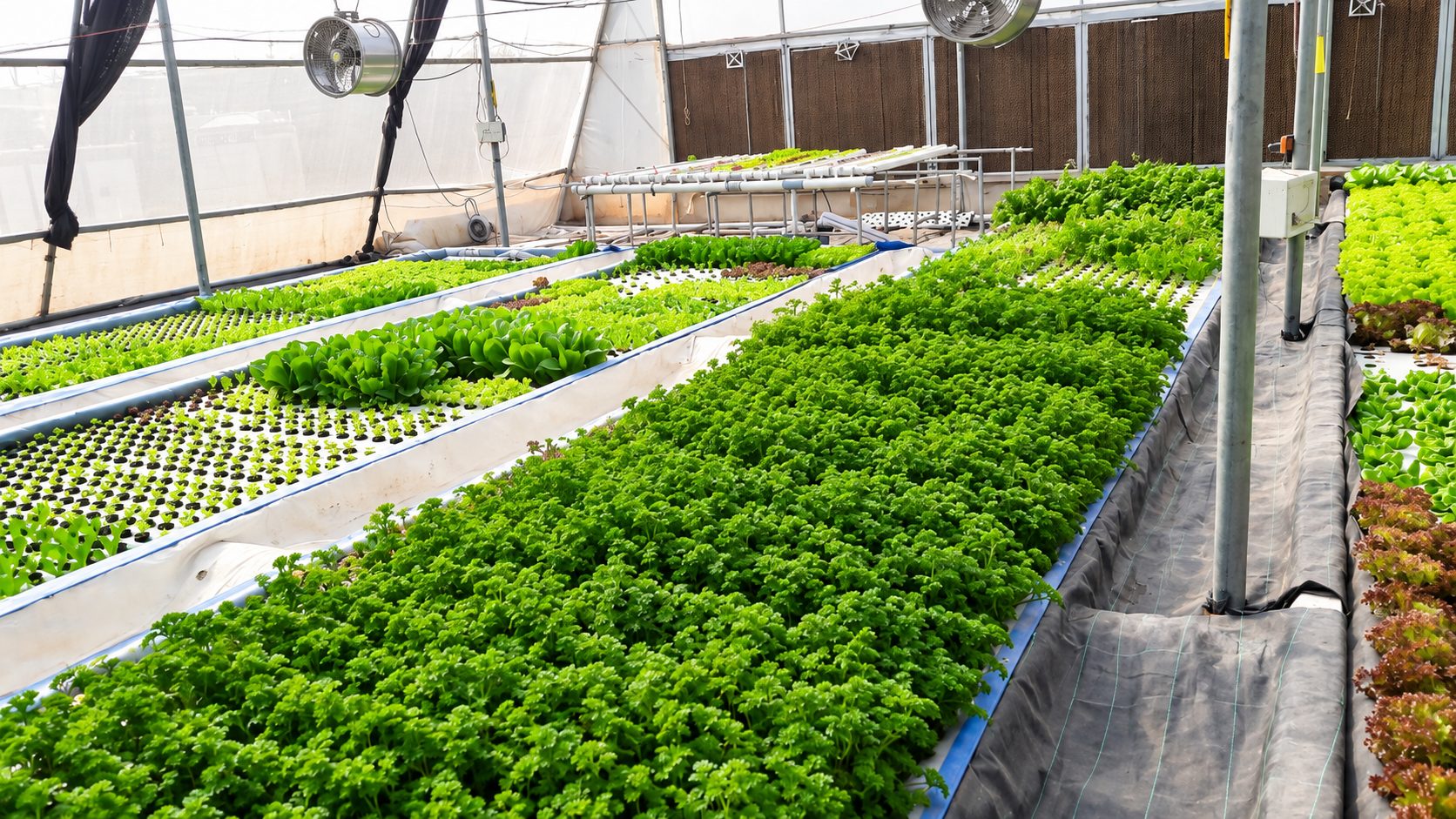
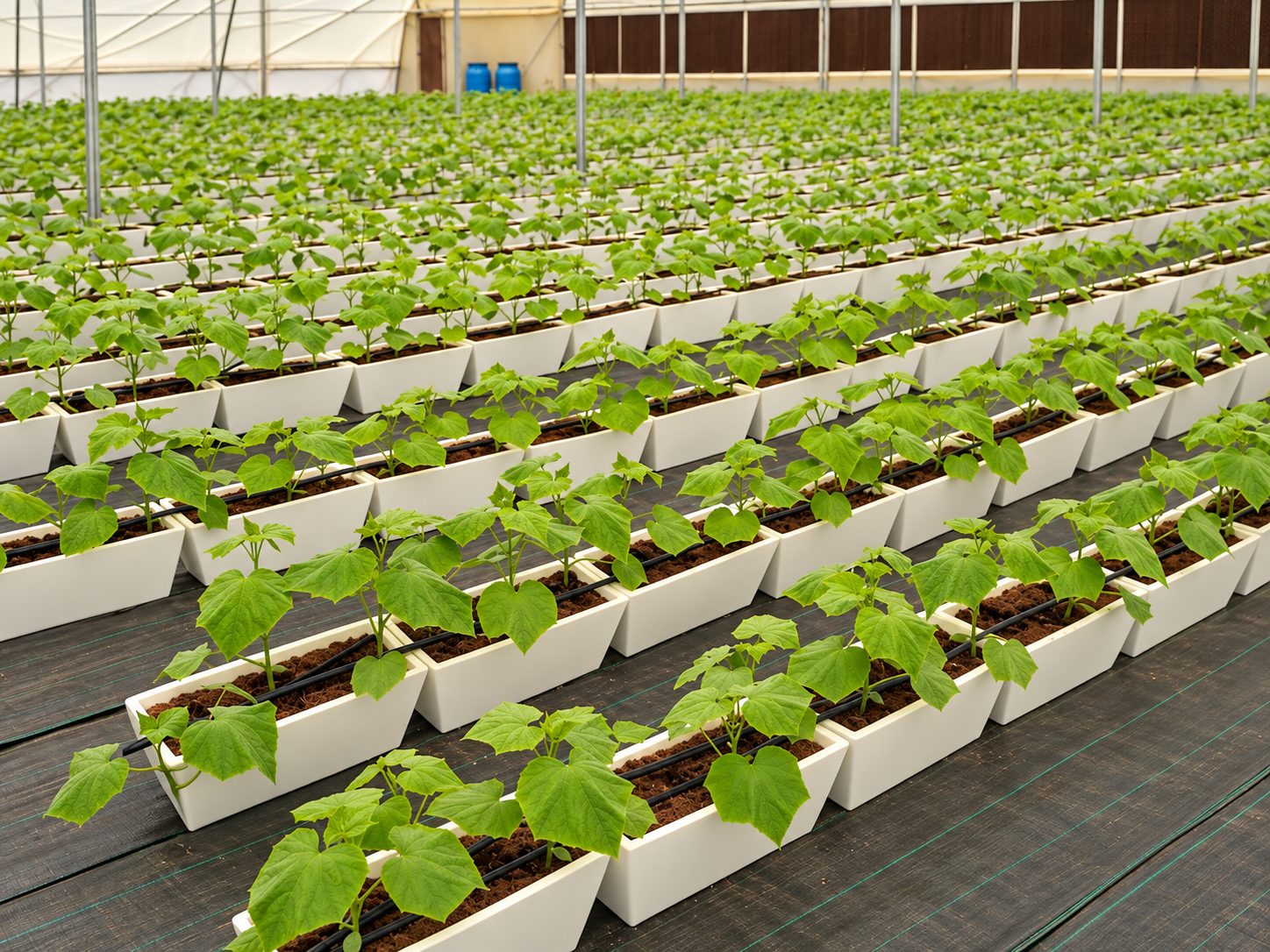
The three systems you'll see most in India are NFT, deep-water culture and drip-fed substrate. We compare them properly in NFT vs DWC vs substrate, but the rule of thumb is simple: greens in water, fruiting crops in cocopeat.
Do you need a greenhouse?
For commercial growing in most of India, yes. Hydroponics without protection means your nutrient solution cooks in May, your crop gets battered in the monsoon, and pests walk straight in. The structure is what lets you grow without spraying and harvest on a schedule.
Which structure depends on where you are. Delhi NCR's dry 45°C summers usually call for fan-and-pad cooling. Milder sites like Nashik can often manage with natural ventilation and shade screens. More on that in our fan-and-pad vs naturally ventilated guide.
Which crops make money?
Crops that are high value, fast, sold fresh and hurt by long supply chains. In practice:
| Works well | Works with care | Usually doesn't |
|---|---|---|
| Lettuces, salad mixes | Strawberries, blueberries | Wheat, rice, pulses |
| Basil, parsley, rocket and other herbs | Coloured capsicum | Potatoes, onions |
| Cherry tomatoes | Exotic vegetables for HoReCa | Most bulk commodity vegetables |
| Cucumbers | Microgreens (small market) | Tree fruit |
We go deeper in the most profitable crops for hydroponics in India.
What does it cost to run?
Set-up cost depends so heavily on site and structure that a single number is misleading; we explain why in how much a hydroponic farm costs. Running costs are more predictable. The usual list:
- Electricity for pumps, fans and, in hot sites, cooling. Never planned around grid power alone.
- Labour for seeding, transplanting, harvesting and packing. Hydroponics is cleaner work than field farming, not less work.
- Seeds and seedlings. Good lettuce and tomato seed is imported and priced accordingly.
- Nutrients and acid for pH correction.
- Water treatment. If your bore well is hard or saline, which is common in north India, you'll likely need RO, and RO needs maintenance and produces reject water.
- Packaging and cold chain. Your premium disappears if the lettuce wilts in a van.
What do new growers get wrong?
From conversations with dozens of people who've tried this:
- Building before finding buyers. A greenhouse full of lettuce and no orders is the most common failure we see.
- Buying a kit designed for another climate. European set-ups assume cool summers and stable power.
- Ignoring water quality until the plants show it.
- Starting too big. A 1,000–2,000 sq ft trial bay will teach you your water, your climate and your buyers before you commit serious money.
- Treating it as passive income. It's farming. Somebody has to check the EC every day.
Is hydroponic produce safe and nutritious?
Yes. Plants take up the same mineral nutrients whether those come from soil or solution. What changes is control: no soil-borne contamination, clean water, and in a sealed greenhouse, pests managed by exclusion and biological control rather than sprays. We explain the difference from organic in hydroponic vs organic vegetables.
Where to start
If you're serious, start with a feasibility study: water test, climate check, a crop plan and a list of who will buy. We do this for growers across India and can show you our own farms. Talk to us or see our commercial hydroponics service.
Frequently asked questions
Is hydroponic farming legal in India?
Yes. There's no special licence for growing hydroponically. You'll need the usual approvals for the structure, power connection and land use, and FSSAI registration if you sell food.
How much land do you need to start hydroponic farming?
A commercial trial can start at 1,000 to 2,000 sq ft of protected growing area. Commercial farms are usually from half an acre upwards, but the right size depends on how much you can reliably sell.
Can I do hydroponics on my terrace?
For home growing, yes. Commercially, terraces are usually limited by load-bearing capacity, water access and the effort of moving produce up and down. Most commercial farms are on the edge of cities instead.
Does hydroponics use less water?
Recirculating systems reuse water, so they typically need far less than open-field farming. Industry references commonly cite 80 to 95% less, though your actual figure depends on climate, crop and how much you lose to cooling and RO reject.
Dhruv Khanna
NTU Singapore alumnus. Recognised by Forbes 30 Under 30 Asia (2019) and Forbes India 30 Under 30 (2020) for Triton's work on water-efficient hydroponics.
About Dhruv Khanna