NFT vs deep-water culture vs substrate: choosing a hydroponic system for Indian conditions
The right hydroponic system is decided by your crop and your summer, not by what looks best in a brochure. A practical comparison for Indian growers.
Key takeaways
- NFT is efficient for leafy greens and herbs but is the most sensitive to heat and power cuts.
- Deep-water culture (DWC) buffers temperature and power interruptions better, at the cost of more water volume and floor space.
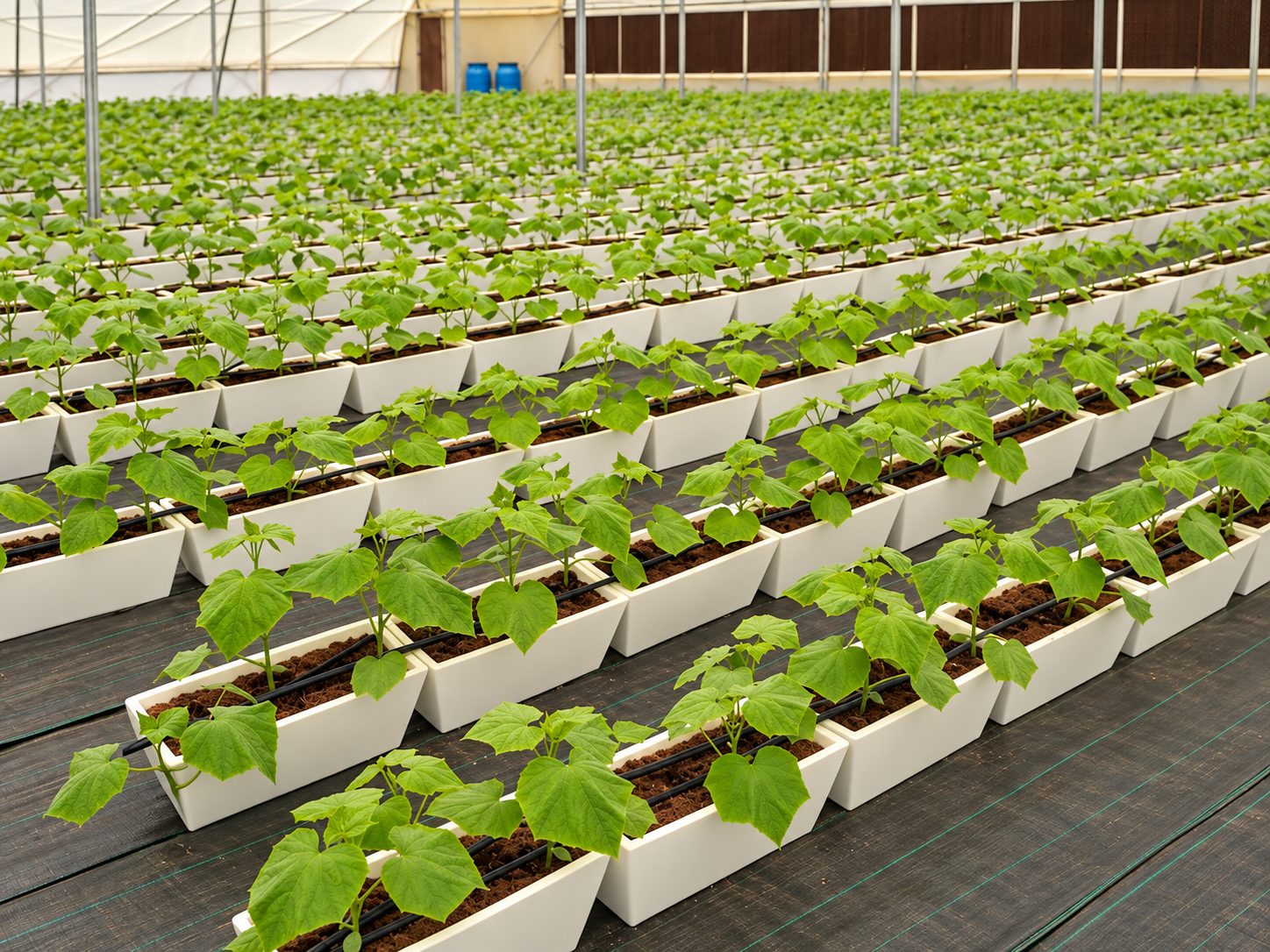
- Drip-fed substrate (cocopeat, perlite) is the standard for fruiting crops such as tomatoes, cucumbers, peppers, strawberries and blueberries.
- In Indian summers, root-zone temperature and dissolved oxygen matter more than the system's name.
- Many commercial farms run more than one system under the same roof.
The short answer
- Leafy greens and herbs: NFT or deep-water culture (DWC).
- Fruiting crops and berries: drip-fed substrate.
- Hot sites with unreliable power: lean towards DWC for greens, and size water storage and backup generously whatever you choose.
How each system works
NFT (nutrient film technique)
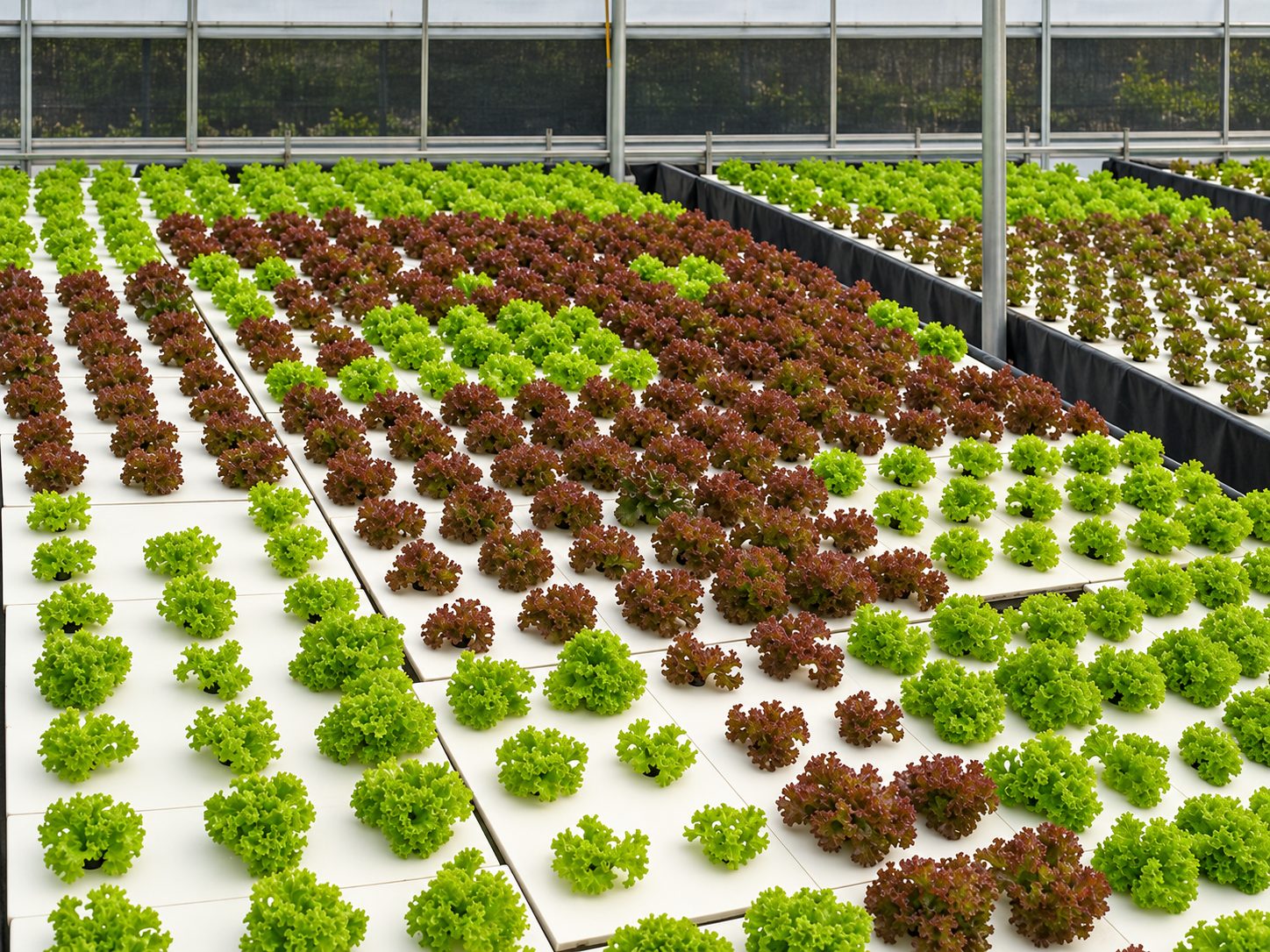
Plants sit in sloped channels while a thin film of nutrient solution flows past their roots and drains back to a tank. It uses little water in circulation and suits fast, light crops such as lettuce, rocket, basil and other herbs.
Deep-water culture (DWC)
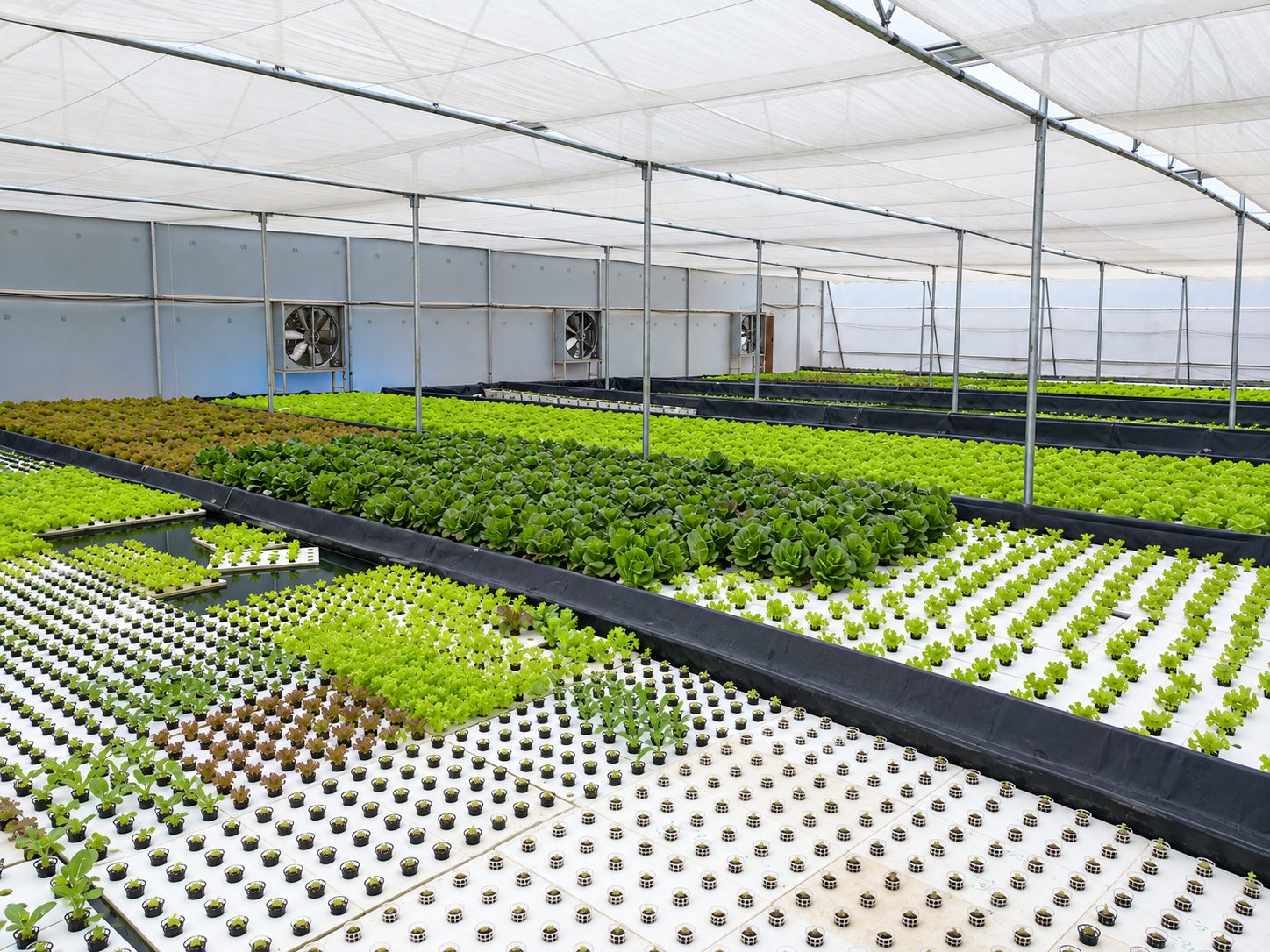
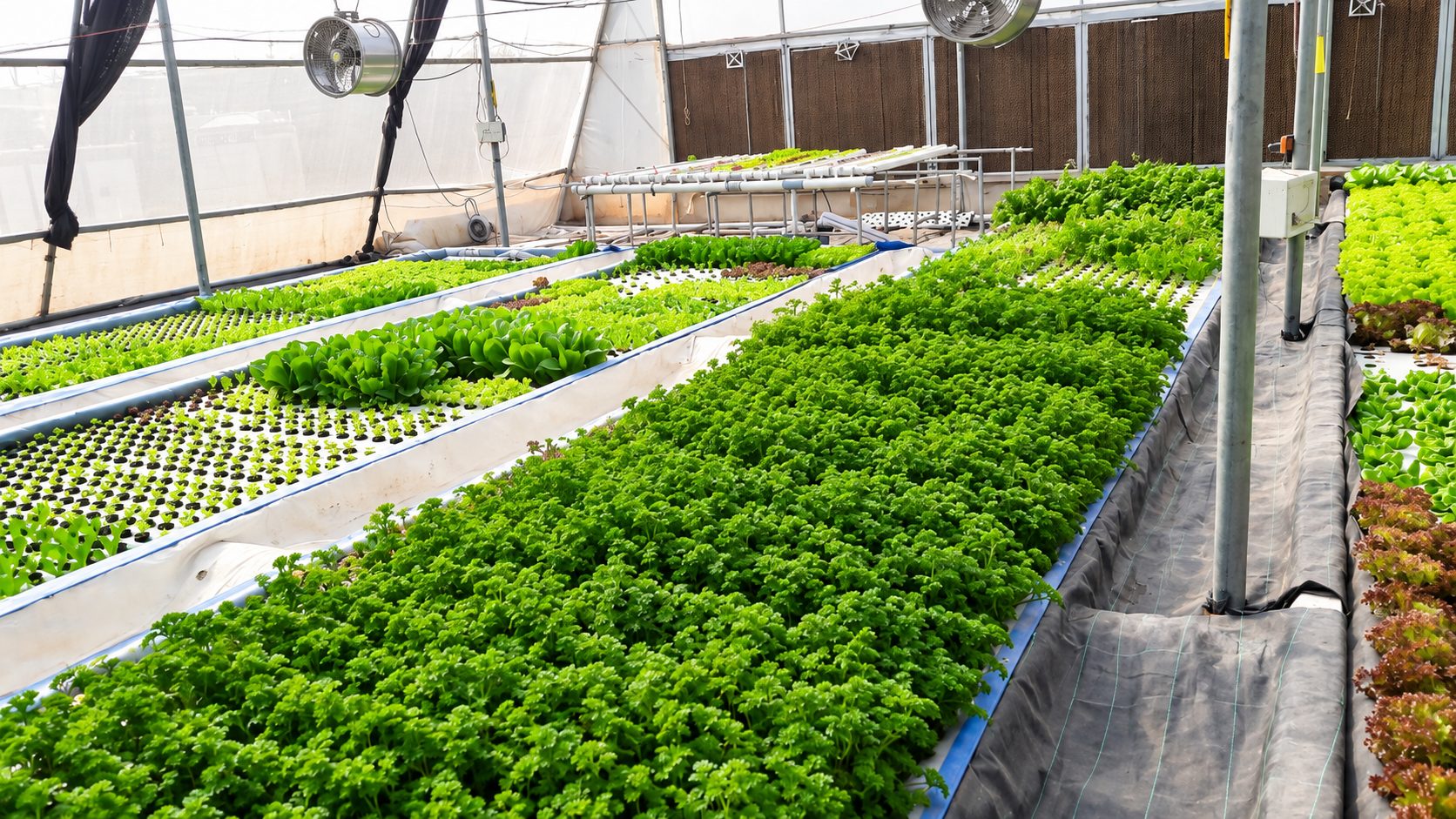
Plants float on rafts over beds of aerated nutrient solution. The large water volume changes temperature slowly and keeps roots wet if a pump stops.
Drip-fed substrate
Plants grow in an inert medium — cocopeat, coco-chips, perlite or a mix — fed by drip emitters on a fertigation schedule. Excess solution drains away or is collected and reused. It is the standard for tomatoes, cucumbers, capsicum, strawberries and blueberries.
Side-by-side comparison
| NFT | DWC | Substrate (drip) | |
|---|---|---|---|
| Best crops | Lettuce, herbs, microgreens | Lettuce, leafy greens | Tomato, cucumber, capsicum, berries |
| Heat tolerance | Low — thin film heats fast | High — large water mass | Medium |
| Power-cut tolerance | Low — roots dry within minutes to hours | High | Medium |
| Water in system | Low | High | Medium |
| Floor space use | Efficient, can be stacked | Less efficient | Row-based |
| Running inputs | Low | Low | Media replacement over time |
Why Indian summers change the answer
Plant roots need oxygen, and warm water holds less dissolved oxygen. When the nutrient solution climbs past the comfortable range for a crop, roots weaken and root diseases spread. In much of north and west India, peak-summer air temperatures outside a greenhouse exceed 40°C, so the root-zone temperature is the design constraint that matters most.
What that means in practice:
- NFT in hot months needs shaded or insulated channels, short channel runs, buried or chilled tanks, and dependable power.
- DWC handles heat better because of its thermal mass, but still benefits from aeration and, at times, chilling.
- Substrate systems need irrigation scheduled to the plant's water demand on hot days, and good drainage to avoid salt build-up.
Water quality matters more than the system
Hydroponics recirculates nutrient solution, so whatever is in your source water stays in the loop. Hard or saline bore-well water is common across north India and usually needs treatment — often reverse osmosis — before it is used. Test your water before you choose equipment.
Can you mix systems?
Yes, and many commercial farms do: DWC or NFT for greens in one bay, substrate for fruiting crops in another. It spreads market risk across crops and lets each crop grow in the system that suits it.
How we decide at Triton
We start with the crop plan and the market, then the site's climate, water and power, and only then choose the system. Our own farms in Manesar and Nashik use the system each crop needs. If you are planning a farm, see our commercial hydroponics service or get in touch.
Frequently asked questions
Which hydroponic system is best for lettuce in India?
NFT and deep-water culture both grow lettuce well. In hot regions or where power is unreliable, deep-water culture is more forgiving because its larger water volume buffers temperature and keeps roots wet if a pump stops.
Can tomatoes be grown in NFT?
It is possible but rarely practical commercially. Tomatoes, cucumbers and peppers are large, long-season plants that are better suited to drip-fed substrate such as cocopeat.
Do I need RO water for hydroponics?
Not always, but often in north India, where bore-well water tends to be hard or saline. Test your source water first; the results decide whether treatment is needed.
Dhruv Khanna
NTU Singapore alumnus. Recognised by Forbes 30 Under 30 Asia (2019) and Forbes India 30 Under 30 (2020) for Triton's work on water-efficient hydroponics.
About Dhruv Khanna