Fan-and-pad greenhouse or naturally ventilated polyhouse? Choosing for Delhi NCR, Maharashtra and beyond
A greenhouse that works in Nashik doesn't automatically work in Delhi NCR. How to choose between fan-and-pad cooling and natural ventilation for your climate.
Key takeaways
- Naturally ventilated polyhouses rely on roof and side vents and suit moderate climates; they cost less to build and run.
- Fan-and-pad greenhouses cool by evaporation and are built for hot, dry summers such as those in Delhi NCR.
- Evaporative cooling is strongest in dry heat and weakest in humid weather, so monsoon months need a ventilation and shading plan too.
- Fan-and-pad needs reliable power and clean water for the pads; budget for both.
- Choose the structure for your hottest month and your crop's temperature range, not your average month.
The short answer
- Moderate climates (for example, Nashik and Pune, where summers are hot but less extreme): a well-designed naturally ventilated polyhouse with shade screens is usually enough for most crops.
- Hot, dry summers (for example, Delhi NCR in April–June): a fan-and-pad greenhouse is usually needed to keep temperature-sensitive crops within range.
- Year-round premium crops in extreme climates: consider a fully climate-controlled structure.
How each structure works
Naturally ventilated polyhouse
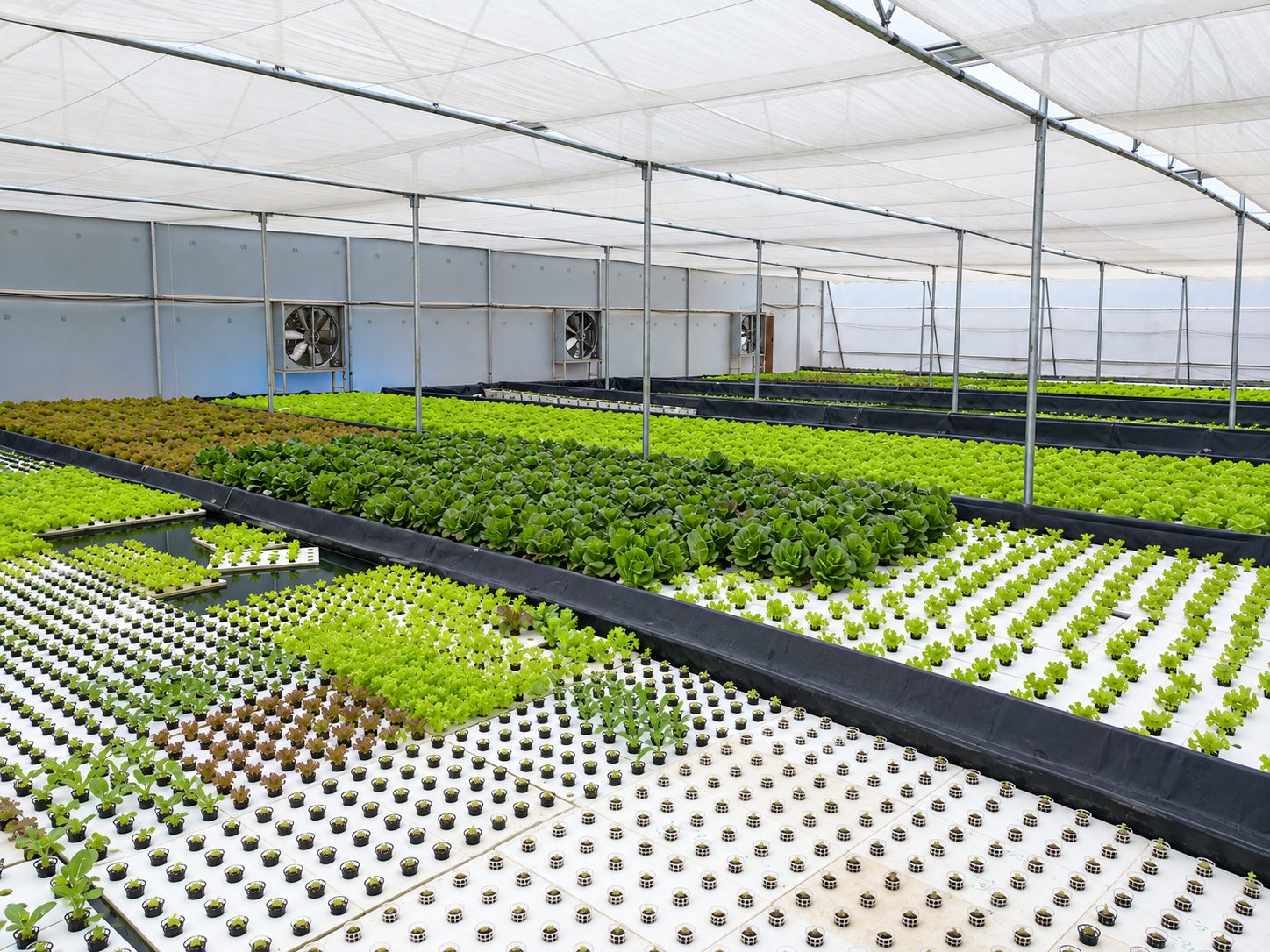
A polythene-clad structure with roof vents and roll-up side curtains. Hot air rises and escapes through the roof vent while cooler air enters from the sides. Insect-proof netting covers the openings, and shade nets or screens reduce heat load. There are few moving parts and little power use.
Fan-and-pad greenhouse
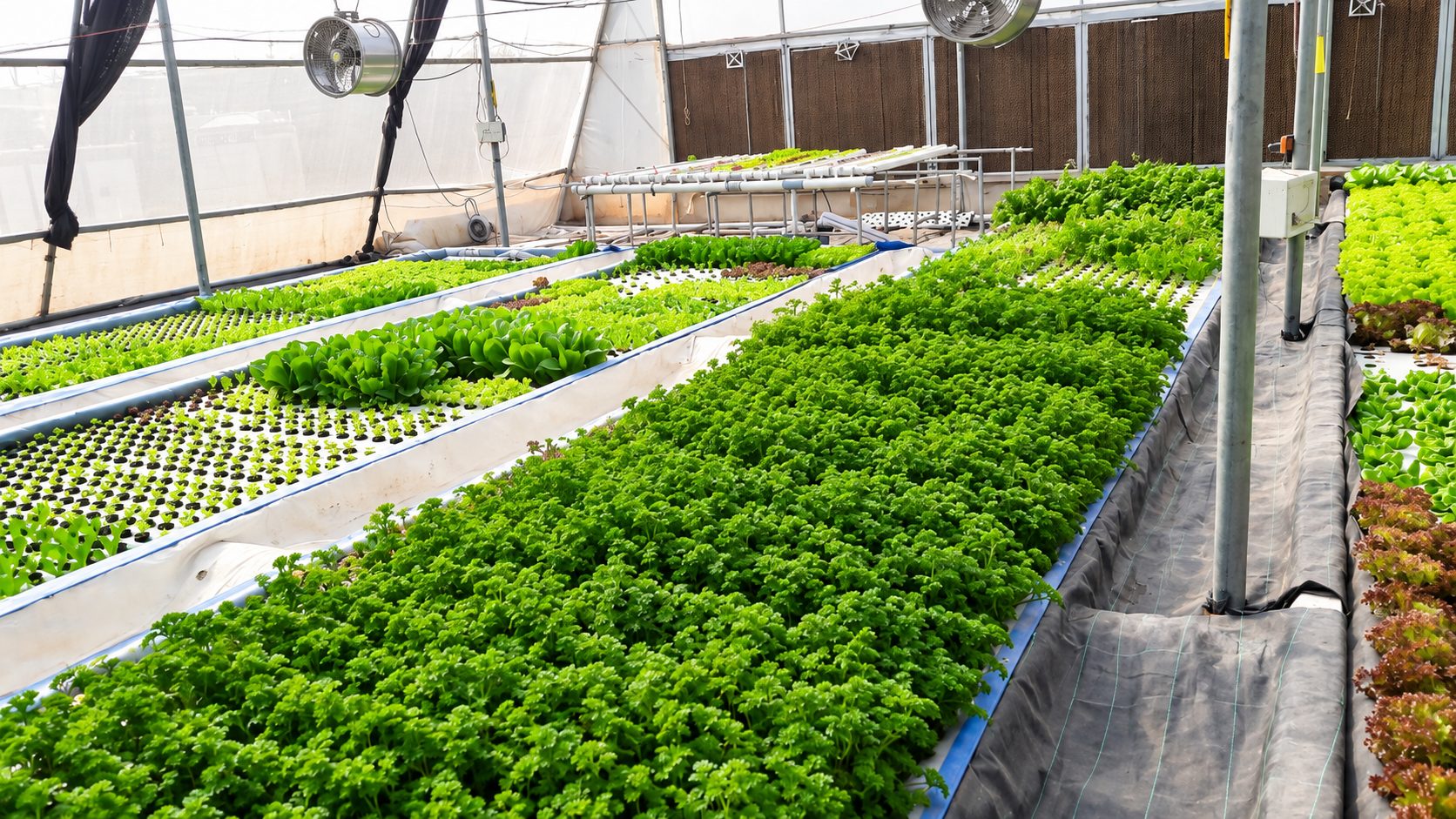
A more closed structure with wet cellulose pads along one wall and large exhaust fans on the opposite wall. Fans pull outside air through the wet pads; water evaporating from the pads cools the air before it crosses the crop. It can bring inside temperatures well below outside temperatures — when the air is dry.
Comparison
| Naturally ventilated | Fan-and-pad | |
|---|---|---|
| Best climate | Moderate, breezy | Hot and dry |
| Cooling method | Natural airflow and shading | Evaporative cooling |
| Power use | Low | High (fans, pumps) |
| Water use for cooling | None | Pad water, continuously |
| Build cost | Lower | Higher |
| Risk if power fails | Low | High in peak heat |
| Typical crops | Leafy greens, flowers, capsicum, cucumber in suitable seasons | Lettuce and berries through hot summers, high-value crops |
Why humidity changes everything
Evaporative cooling depends on dry air. In Delhi NCR's pre-monsoon heat, when the air is very dry, fan-and-pad cooling works well. During the monsoon, when outside air is already humid, pads cool far less, and the problem shifts from heat to humidity and disease. A good design plans for both seasons: shading, air circulation fans and ventilation strategy for humid months, not just cooling for hot ones.
Running costs people forget
- Power: fans and pumps run for long hours in summer; a reliable supply and backup are essential.
- Pad water: pads need clean water; hard water scales pads quickly, so pad maintenance and water treatment matter.
- Maintenance: pads, fan belts and curtains wear out and need replacement on schedule.
How to decide
- Find your site's hottest and most humid months and their typical temperatures and humidity.
- Check your crop's comfortable temperature range.
- If a naturally ventilated polyhouse with shading can hold that range through your hottest month, choose it. If not, step up to fan-and-pad or full climate control.
- Make sure power and water supply can support the choice.
Government cost norms reflect the difference: the National Horticulture Board's published norm for a fan-and-pad greenhouse is well above that for a naturally ventilated tubular structure. See our subsidy guide.
How Triton approaches it
We farm in both climates — Manesar in Delhi NCR and Nashik in Maharashtra — and design structures for the site's actual weather. Every project starts with a site and climate assessment. See our greenhouse design and installation service or contact us.
Frequently asked questions
Is a naturally ventilated polyhouse enough for Delhi?
For many crops outside peak summer, yes. For temperature-sensitive crops through April to June, a naturally ventilated polyhouse usually struggles in Delhi NCR's heat, and fan-and-pad cooling or full climate control is needed.
Does fan-and-pad cooling work during the monsoon?
Much less effectively. Evaporative cooling depends on dry air, so in humid weather the pads cool far less. Monsoon months need a plan for ventilation, air circulation and disease control.
Which polyhouse type gets more subsidy?
Subsidy is a percentage of a cost norm per square metre, and the norm for fan-and-pad greenhouses is higher than for naturally ventilated structures. The percentage is the same; the rupee amount differs.
Sources
Dhruv Khanna
NTU Singapore alumnus. Recognised by Forbes 30 Under 30 Asia (2019) and Forbes India 30 Under 30 (2020) for Triton's work on water-efficient hydroponics.
About Dhruv Khanna