Polyhouse farming in India: crops, costs and what actually makes money
A polyhouse doesn't make a farm profitable. The crop, the climate fit and the buyer do. Here's how to think about all three.
Key takeaways
- A polyhouse is a greenhouse clad in polythene film. In India the two words are used almost interchangeably.
- Coloured capsicum, seedless cucumber, tomato, gerbera, rose and carnation are the classic polyhouse crops; lettuce, herbs and berries are growing fast.
- Climate decides the structure: naturally ventilated in moderate regions, fan-and-pad where summers are hot and dry.
- Subsidy is calculated on government cost norms, so it rarely covers half the real cost of a well-built structure.
- Disease, poor ventilation and selling at mandi prices are the usual reasons polyhouses fail.
"Polyhouse farming" is one of the most searched farming terms in India, and most of what comes up is either a subsidy explainer or a project report with optimistic yield numbers. Neither tells you why so many polyhouses in Maharashtra, Karnataka and Haryana have been abandoned. This guide tries to.
What is a polyhouse?
A polyhouse is a framed structure, usually galvanised steel pipe, covered in UV-stabilised polythene film. It protects the crop from rain, wind, hail and insects and lets you manage temperature and humidity. "Greenhouse" is the broader term; in India most commercial greenhouses are polyhouses, so the words get used interchangeably.
It sits between two other options:
| Structure | What it does | Typical use |
|---|---|---|
| Shade net house | Cuts sunlight and heat, keeps out larger pests | Nurseries, leafy vegetables in summer |
| Naturally ventilated polyhouse | Rain and insect protection, passive ventilation | Capsicum, cucumber, flowers in moderate climates |
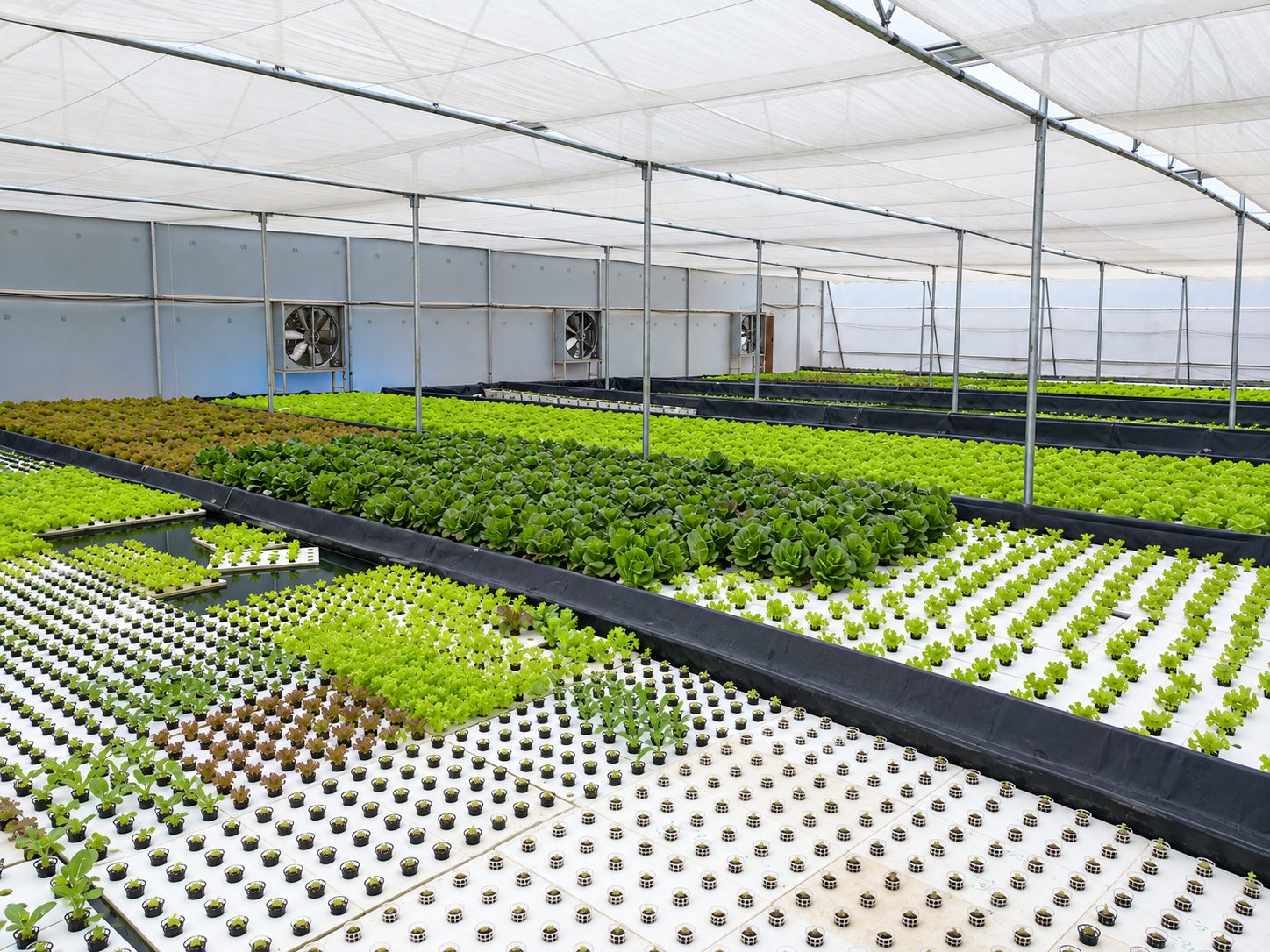
| Fan-and-pad greenhouse | Evaporative cooling, tighter climate control | Lettuce, berries and high-value crops in hot regions |
Which crops are grown in polyhouses?
The crops that built India's polyhouse sector are:
- Coloured capsicum (red and yellow bell peppers)
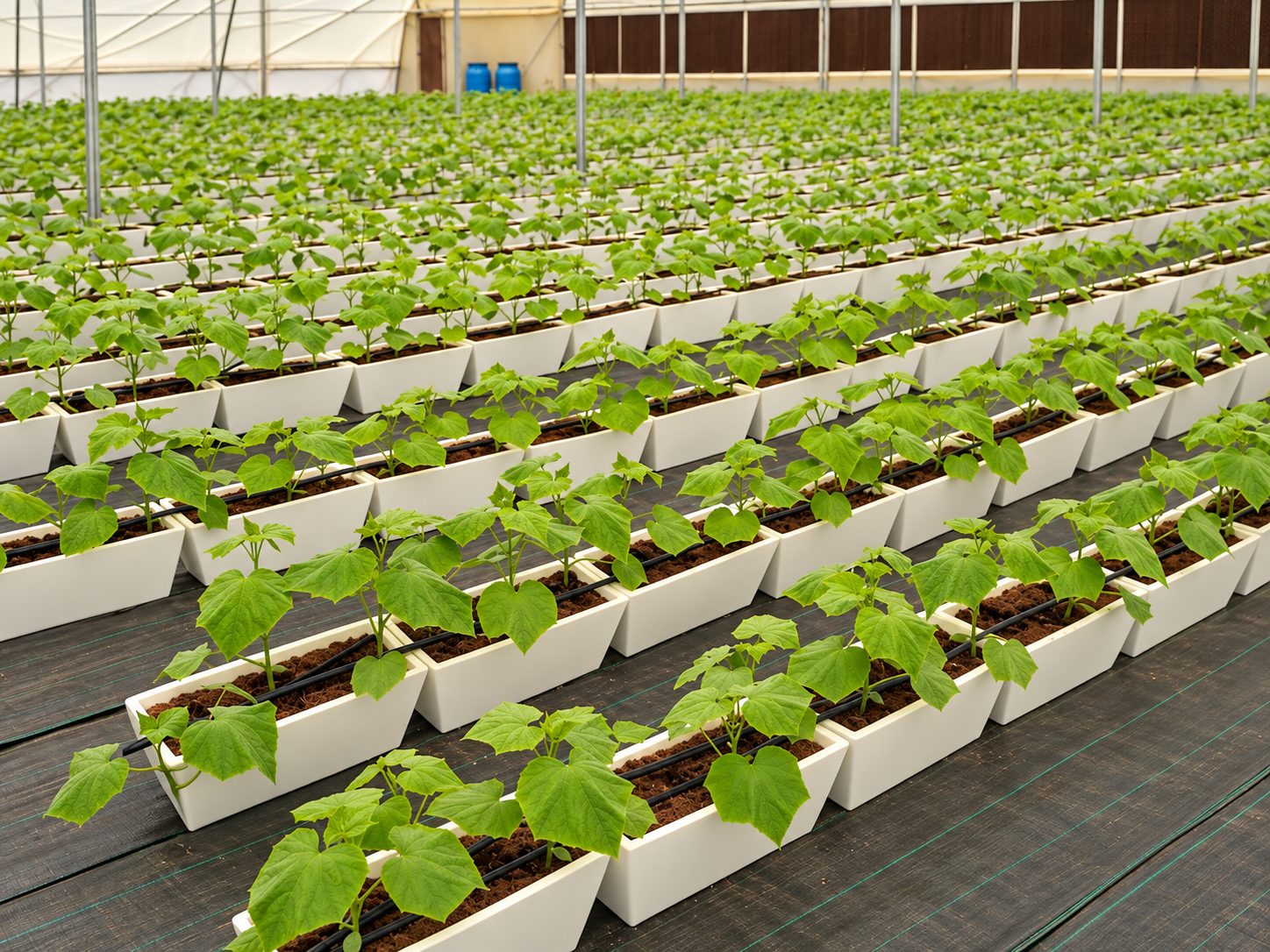
- Seedless (parthenocarpic) cucumber
- Tomato, including cherry tomatoes
- Cut flowers: gerbera, rose, carnation
Newer crops gaining ground, especially near big cities:
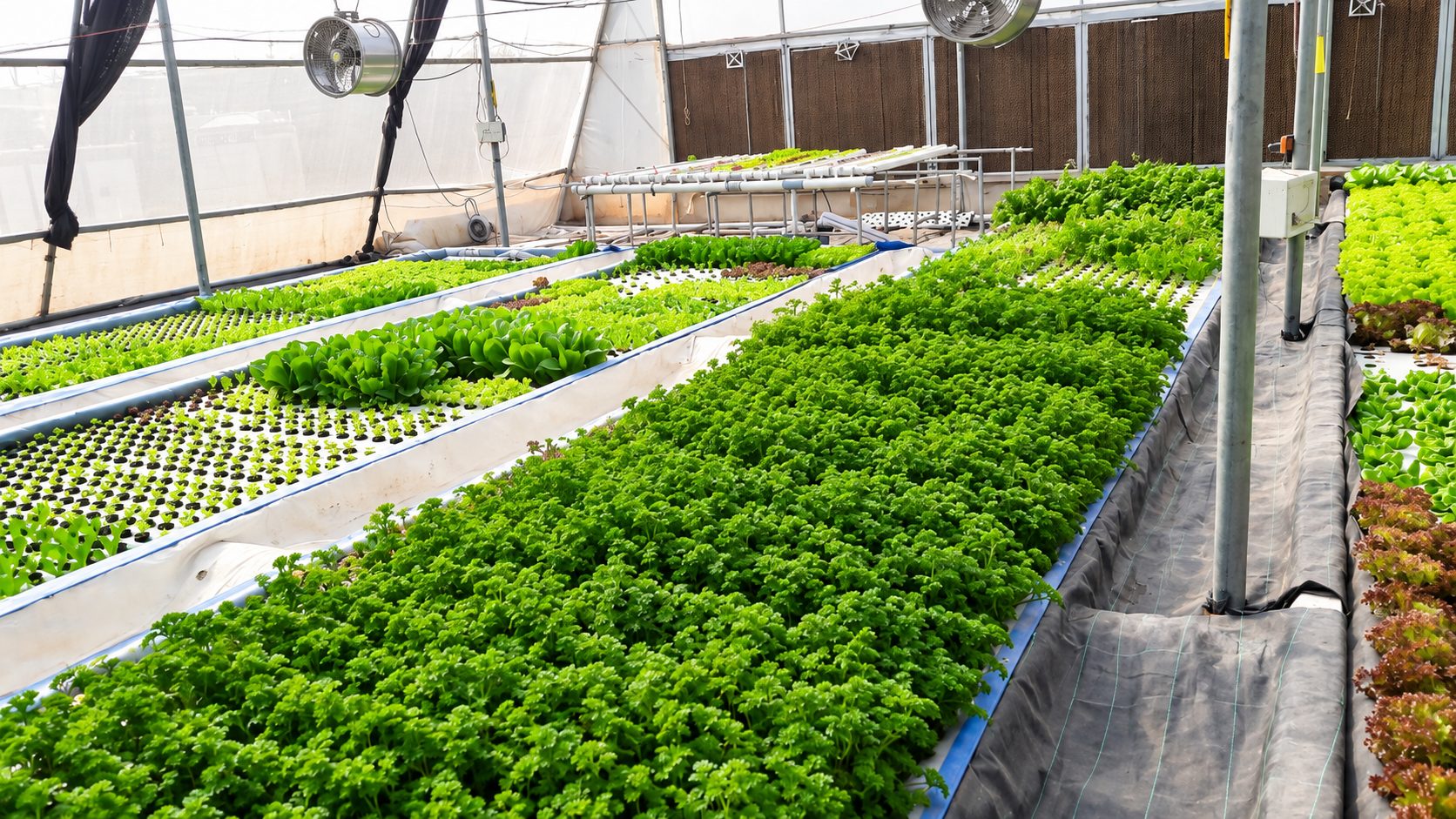
- Lettuce and salad greens, often grown hydroponically inside the polyhouse
- Herbs such as basil and parsley
- Strawberries and blueberries, usually in substrate
The common thread is value per square metre. A polyhouse costs too much to fill with a crop that sells at mandi rates.
How much does a polyhouse cost?
It depends on the structure type, cladding, height, climate control and site work. Government cost norms give a sense of the relative order: the National Horticulture Board's published norms put a fan-and-pad greenhouse at ₹1,400 per sq m and a naturally ventilated tubular polyhouse at ₹844 per sq m in general areas. Real quotes for good structures usually come in above the norms. We break down what drives the budget in how much a hydroponic farm costs, and explain the subsidy in polyhouse subsidy in India.
Why do so many polyhouses fail?
We've visited many abandoned or struggling polyhouses. The reasons repeat:
- Wrong structure for the climate. A naturally ventilated polyhouse in a region with 45°C summers becomes an oven.
- Poor ventilation and humidity control, which brings fungal disease. Once downy mildew or whitefly takes hold in a closed space, it's hard to get rid of.
- One crop, one buyer. Growing only capsicum and selling to a single trader leaves you exposed to every price crash.
- Selling at mandi rates. Polyhouse produce needs a premium channel: retail, HoReCa or quick-commerce.
- No trained grower. Protected cultivation is closer to running a small factory than to field farming.
- Built to win the subsidy, not to grow. Some structures are specified around scheme norms rather than the crop's needs.
How to make a polyhouse work
- Choose the crop and buyer first, then design the structure around them.
- Size cooling and ventilation for your hottest, most humid weeks.
- Plan for at least two crops or two buyer channels.
- Consider soilless growing (cocopeat or hydroponics). It sidesteps soil-borne disease, which is one of the main killers of older polyhouses.
- Get your water tested before you build.
Where Triton fits
We design and build polyhouses and greenhouses for Indian climate zones, and we grow in them ourselves in Manesar and Nashik. If you're planning one, start with a conversation or see our greenhouse design and installation service.
Frequently asked questions
What is the difference between a polyhouse and a greenhouse?
A polyhouse is a type of greenhouse covered with polythene film. Greenhouse is the broader term and can include glass or polycarbonate cladding. In India most commercial greenhouses are polyhouses.
Which crop is most profitable in a polyhouse?
It depends on your market more than the crop. Coloured capsicum, seedless cucumber, cherry tomatoes and cut flowers are proven; lettuce, herbs and berries do well near cities with premium buyers. Profit comes from a reliable buyer at a premium price.
How long does a polyhouse last?
The steel frame of a well-built polyhouse can last many years. The polythene film is replaced periodically, typically every few years depending on the grade and local sunlight, and nets and cooling pads also need scheduled replacement.
Sources
Dhruv Khanna
NTU Singapore alumnus. Recognised by Forbes 30 Under 30 Asia (2019) and Forbes India 30 Under 30 (2020) for Triton's work on water-efficient hydroponics.
About Dhruv Khanna