How much does a commercial hydroponic farm cost in India?
There is no honest 'per acre' price for a hydroponic farm. Here are the six things that actually set the budget — and how to get a number you can bank on.
Key takeaways
- The structure (greenhouse or polyhouse) is usually the largest single cost, and its type is set by your climate, not your crop wish-list.
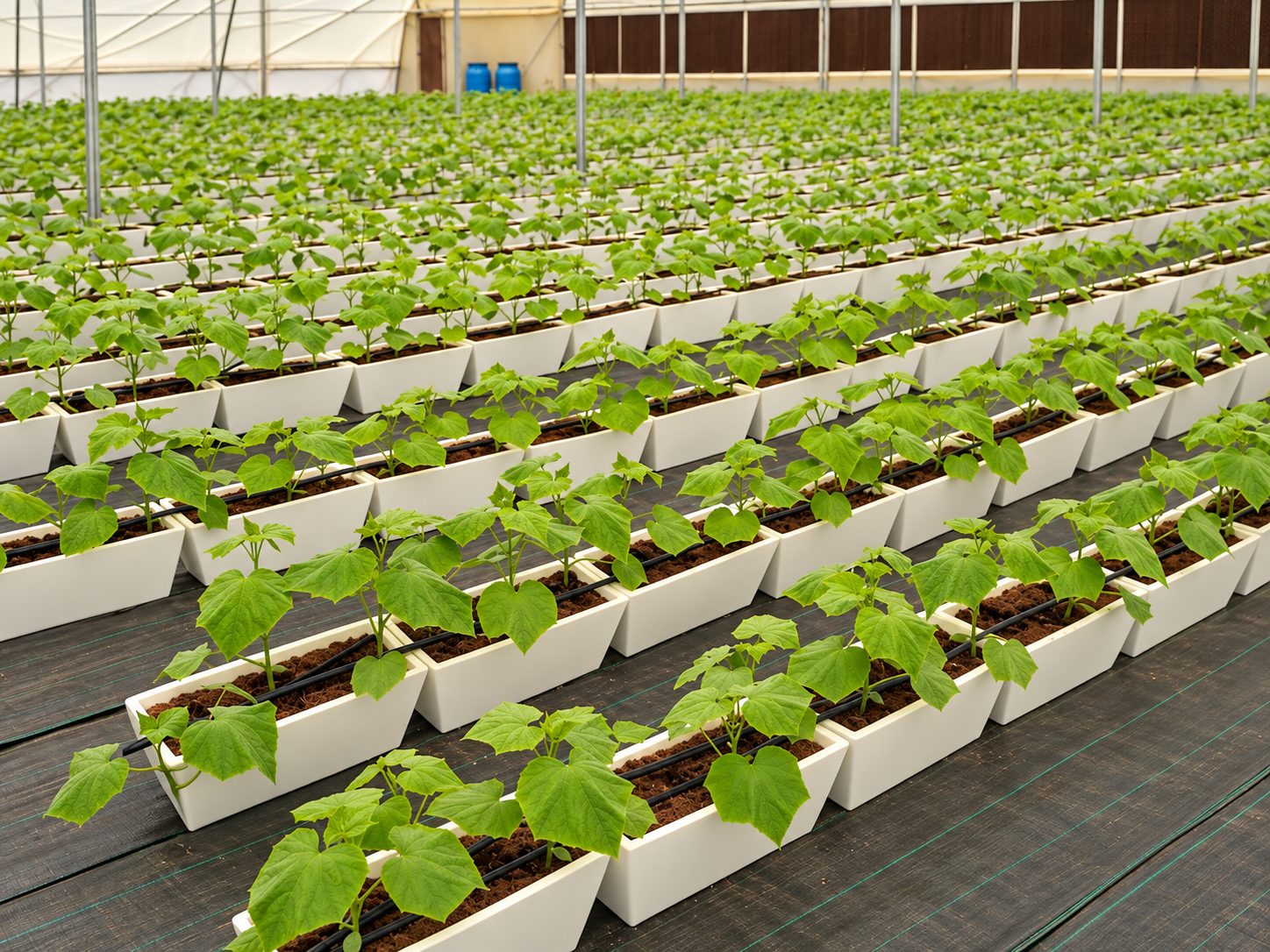
- Crop choice decides the hydroponic system: NFT and deep-water culture suit leafy greens; drip-fed substrate suits tomatoes, cucumbers, peppers and berries.
- Automation, water treatment and power backup are the line items most often under-budgeted.
- Government subsidy under MIDH/NHB is calculated on fixed cost norms per square metre, not on your actual quote.
- Ask for a feasibility study with unit economics before you ask for a price.
The short answer
A commercial hydroponic farm in India is priced per square metre of growing area, and the range is wide because two farms of the same size can need completely different structures and systems. A naturally ventilated polyhouse with NFT channels for lettuce in a mild climate costs a fraction of a fan-and-pad greenhouse with automated fertigation for tomatoes in Delhi NCR's 45°C summers.
For a sense of scale, an operator quoted in Open magazine in 2020 put a one-acre commercial hydroponic setup at roughly ₹1.5–2 crore, and noted that costs had been falling. Treat that as a dated reference point, not a quote. The only number worth planning around is one built from your site, your crop and your climate.
What actually drives the cost?
1. The structure
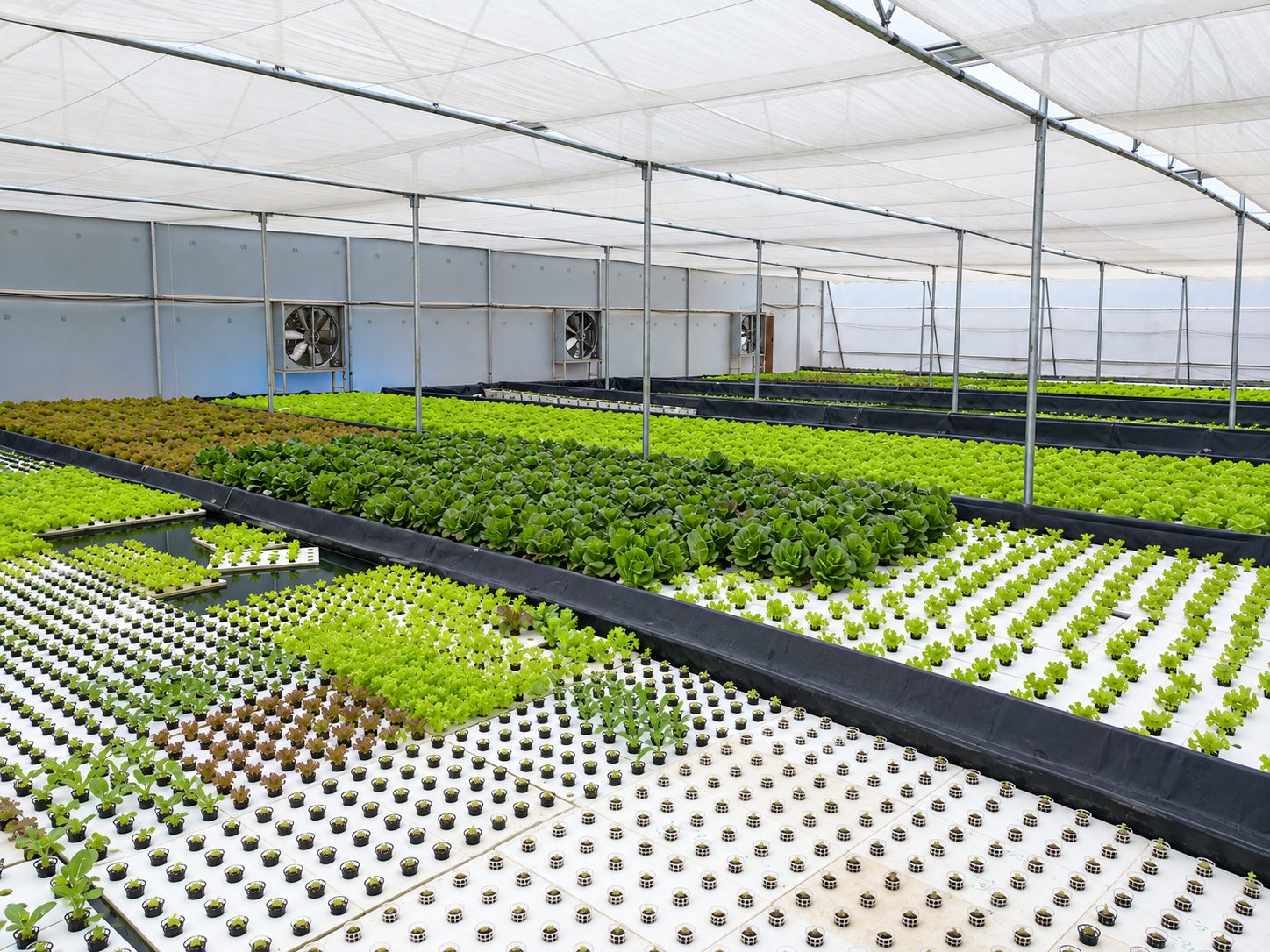
The greenhouse or polyhouse is usually the biggest line item. The choice is driven by climate:
| Structure | Where it fits | Relative cost |
|---|---|---|
| Shade net house | Mild climates, nursery, low-value crops | Lowest |
| Naturally ventilated polyhouse | Moderate climates such as Nashik and Pune | Medium |
| Fan-and-pad greenhouse | Hot, dry summers such as Delhi NCR | High |
| Fully climate-controlled | Year-round premium crops, extreme climates | Highest |
The National Horticulture Board's published cost norms show the same order: fan-and-pad greenhouses carry the highest norm per square metre, naturally ventilated tubular structures sit well below that, and shade-net houses lower still. See our guide to choosing between fan-and-pad and naturally ventilated polyhouses.
2. The crop and the hydroponic system
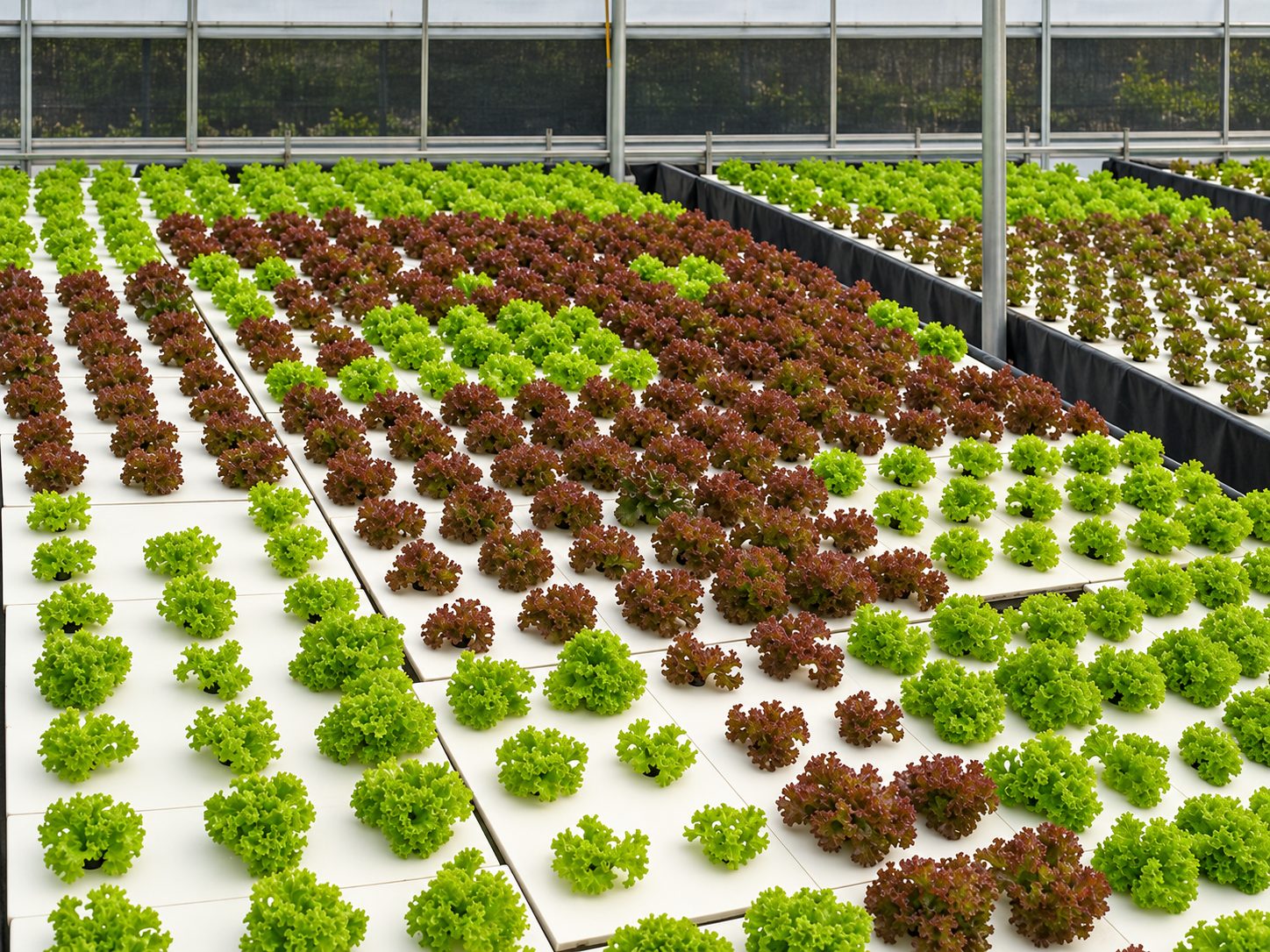
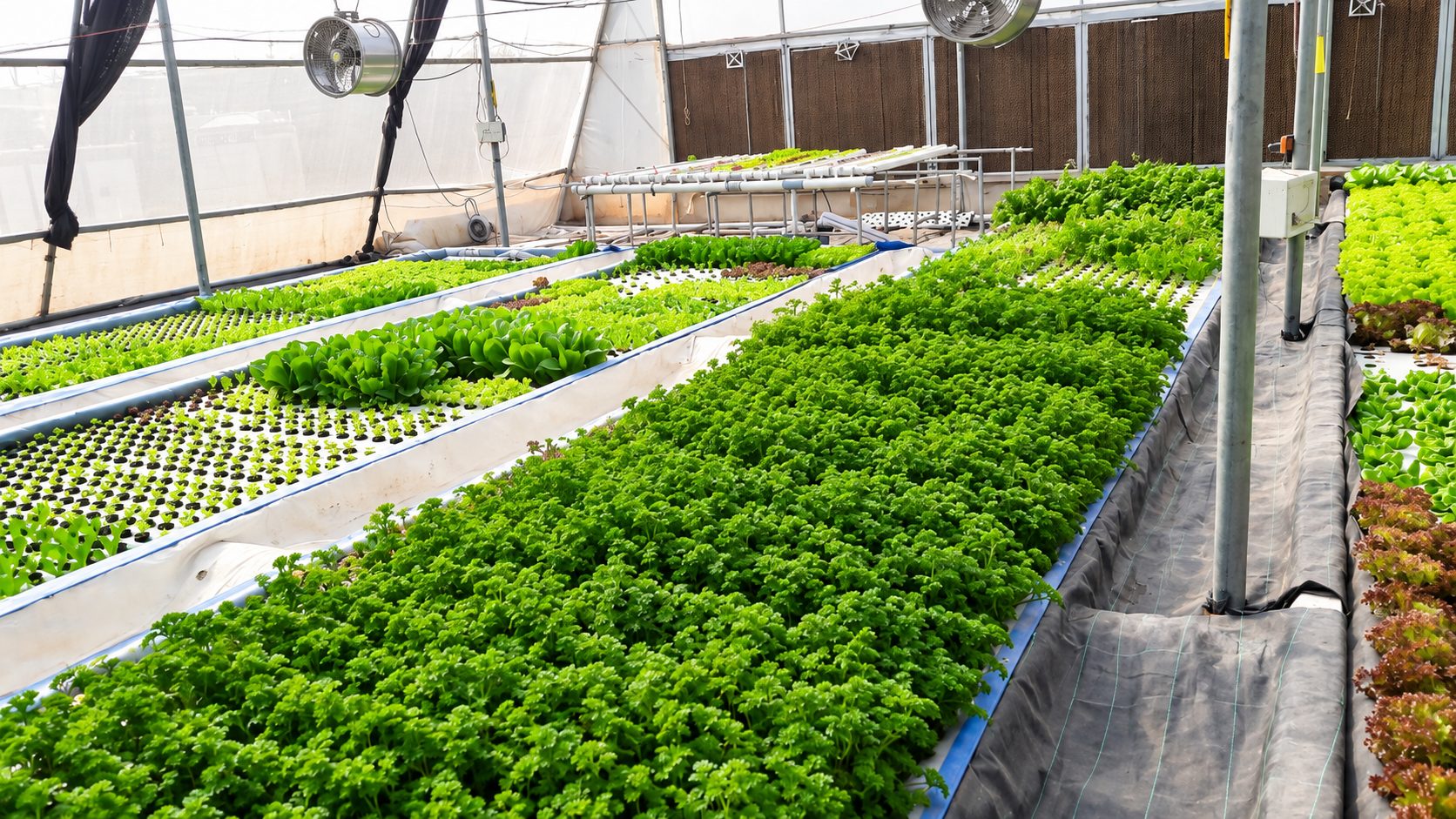
Leafy greens and herbs grow well in NFT (nutrient film technique) or deep-water culture. Fruiting crops — tomatoes, cucumbers, peppers, strawberries, blueberries — need drip-fed substrate such as cocopeat. Substrate systems need more plumbing and media replacement; NFT and DWC need more careful water-temperature control in Indian summers. We compare them in detail in NFT vs DWC vs substrate.
3. Climate control and automation
Fans, cooling pads, shade screens, foggers, sensors, dosing units and controllers can be specified anywhere from manual to fully automated. More automation costs more upfront but reduces labour and crop losses. The right level depends on crop value and how many people you can reliably staff.
4. Water treatment
Hydroponics recirculates nutrient solution, so source water quality matters. Bore-well water in much of north India is hard or saline and often needs reverse osmosis before use. RO plants, storage and reject-water handling are frequently left out of early budgets.
5. Power and backup
Pumps, fans and cooling cannot stop. A few hours without circulation in May can damage a crop, so a reliable grid connection and backup (diesel generator, solar with storage, or both) belong in the capital budget.
6. Site services
Land levelling, foundations, drainage, approach roads, packhouse and cold room, and the distance from your market all add cost — and the last one decides whether a premium crop stays premium by the time it reaches a buyer.
How do subsidies change the numbers?
Protected-cultivation projects can qualify for capital subsidy under the Mission for Integrated Development of Horticulture (MIDH), through state horticulture departments, and through the National Horticulture Board for larger projects. Two things matter for budgeting:
- The subsidy is calculated on the government's cost norms per square metre, not on your quote. If your structure costs more than the norm, the subsidy covers a smaller share of the real cost.
- NHB assistance is credit-linked and back-ended: you finance the project, and the subsidy is adjusted against the loan after completion and inspection.
Our polyhouse and hydroponics subsidy guide explains the schemes in detail.
What do people most often get wrong?
- Buying a kit, not a farm. Imported or off-the-shelf systems rarely account for Indian heat, water quality and power.
- Choosing the crop last. The crop decides the system, the structure and the market.
- Ignoring the market. A greenhouse 200 km from its buyers is a logistics business with a farm attached.
- Skipping training. A well-built farm run without crop protocols loses money.
How to get a realistic quote
Start with a feasibility conversation, not a price list. A useful feasibility study covers site and water analysis, a climate assessment, a crop plan with expected yields, capital and operating costs, and a break-even estimate. At Triton we run our own farms in Manesar and Nashik, so the numbers we use come from production, not brochures. Tell us about your site and we will start there.
Frequently asked questions
Is hydroponic farming profitable in India?
It can be, when the crop, the structure and the market are matched. Profitability depends on selling consistently at a premium to buyers close to the farm, keeping crop losses low, and not over- or under-building the structure for the local climate.
What is the cheapest way to start hydroponic farming commercially?
A naturally ventilated polyhouse with NFT or deep-water culture for leafy greens, in a moderate climate and close to buyers, is usually the lowest-cost commercial starting point. Start with a feasibility study before committing capital.
Does the government subsidise hydroponic farms?
Subsidies under MIDH and the National Horticulture Board mainly cover the protected-cultivation structure and, in some cases, planting material for high-value crops. Hydroponic equipment itself is not a standard central line item, so check with your state horticulture department.
Sources
Dhruv Khanna
NTU Singapore alumnus. Recognised by Forbes 30 Under 30 Asia (2019) and Forbes India 30 Under 30 (2020) for Triton's work on water-efficient hydroponics.
About Dhruv Khanna