The most profitable crops for hydroponics in India (and the ones to avoid)
The best hydroponic crop isn't the one with the highest price per kilo. It's the one you can sell every week to the same buyer.
Key takeaways
- Lettuces and herbs are the most forgiving starting crops: fast cycles, steady demand and suited to NFT or deep-water systems.
- Cherry tomatoes and cucumbers pay well but need substrate systems, trellising and more skilled labour.
- Berries have the highest value and the steepest learning curve.
- Staples like potatoes, onions, wheat and rice almost never justify the cost of a controlled environment.
- Pick crops your buyers already order, not crops that look good in a pitch deck.
We get asked "what's the best crop for hydroponics?" more than any other question. The honest answer is: the one you can sell. A crop that fetches ₹800 a kilo is worthless if nobody near you buys it weekly. With that caveat, some crops clearly suit Indian hydroponics better than others.
The crops that work
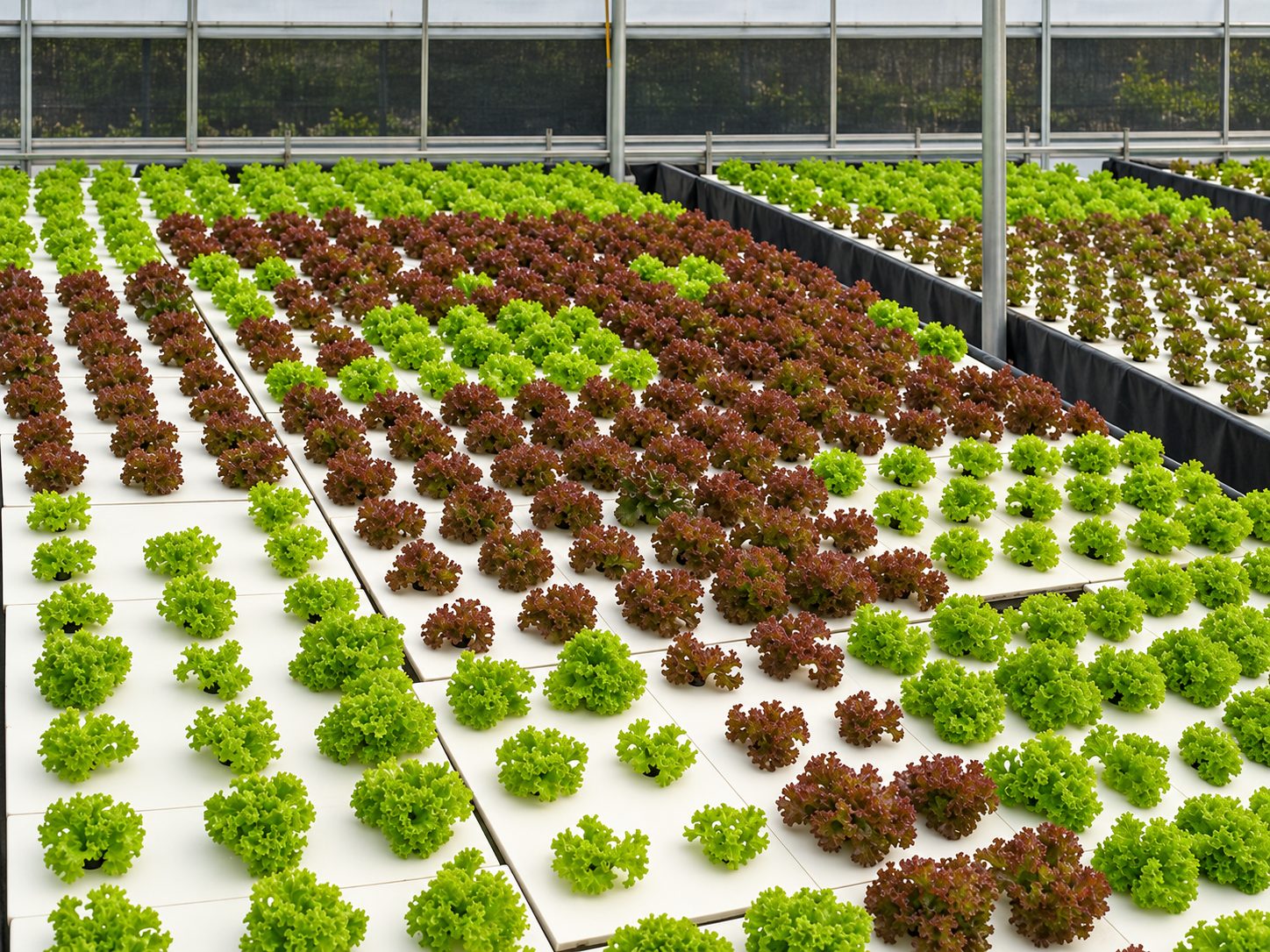
Lettuce and salad greens
Butterhead, romaine, oakleaf, lollo rosso, iceberg-type and mixed baby leaf. This is where most commercial hydroponic farms in India start, us included.
- Why it works: short cycles, so you learn fast and cash flows quickly. Hotels, cafés, cloud kitchens, salad brands and quick-commerce all buy it.
- System: NFT or deep-water culture.
- Watch out for: bolting and tip-burn in hot weather. Lettuce hates heat, so summer needs good cooling.
Herbs
Basil (Italian and Thai), parsley, rocket, coriander, mint and others.
- Why it works: high value per gram, steady restaurant demand, and many herbs regrow after cutting.
- System: NFT or deep-water.
- Watch out for: small volumes per buyer. You need several buyers to fill a farm.
Cherry tomatoes
- Why it works: strong premium over regular tomatoes, long harvest window, good shelf life.
- System: drip-fed cocopeat, trellised vertically.
- Watch out for: labour for pruning, clipping and pollination, plus pests like whitefly in poorly sealed structures.
Seedless cucumbers
- Why it works: fast to fruit, heavy yields, popular as "snack" or "English" cucumbers.
- System: drip-fed cocopeat.
- Watch out for: a crowded market in some regions. Check local prices first.
Strawberries and blueberries
- Why it works: the highest value of the lot, and imports leave a freshness gap local growers can fill.
- System: substrate in tunnels or greenhouses. Blueberries need an acidic root zone.
- Watch out for: expensive planting material, long establishment (especially blueberries) and real agronomic skill. See our guides to strawberry farming and growing blueberries in India.
The crops to avoid
| Crop | Why it rarely works hydroponically in India |
|---|---|
| Wheat, rice, pulses | Very low value per square metre; open fields do it far cheaper |
| Potatoes, onions, carrots | Root and bulb crops are awkward in water systems and cheap in the market |
| Leafy Indian staples (palak, methi) at mandi prices | Possible to grow, hard to sell at a price that covers greenhouse costs |
| Tree fruit | Far too big and slow |
Spinach and coriander can work if you sell them as clean, pesticide-free, packed product to premium buyers. They don't work at mandi prices.
How to choose
- List your buyers first. Who will take produce every week, at what price, in what pack?
- Match the crop to your climate and structure. Lettuce in a naturally ventilated polyhouse in Delhi in June is asking for trouble.
- Start with one fast crop to learn the system, then add a higher-value one.
- Keep at least two crops and two buyer types so a single price drop doesn't sink you.
If you'd like help building a crop plan around your site and buyers, get in touch or read how hydroponic farming works in India.
Frequently asked questions
What is the easiest crop to grow hydroponically?
Lettuce and leafy greens. They grow quickly, need simple NFT or deep-water systems and give you feedback within weeks, which makes them the best crop to learn on.
Can I grow vegetables like spinach and coriander hydroponically?
Yes, both grow well. The challenge is price: they're cheap at mandis, so they only pay in hydroponics when sold as premium, clean, packed produce.
Which hydroponic crop has the highest value?
Berries, especially blueberries, and some specialty herbs. They also need the most investment and skill, so most growers add them after learning on greens.
Dhruv Khanna
NTU Singapore alumnus. Recognised by Forbes 30 Under 30 Asia (2019) and Forbes India 30 Under 30 (2020) for Triton's work on water-efficient hydroponics.
About Dhruv Khanna