Vertical farming vs greenhouse hydroponics in India: which makes sense?
Vertical farms grow under LEDs; greenhouses use the sun. In a country with India's sunshine and power costs, that difference decides a lot.
Key takeaways
- Vertical farms grow indoors in stacked layers under artificial light; greenhouses use sunlight.
- Electricity for lighting and cooling is the defining cost of a vertical farm.
- India's strong sunlight gives greenhouses a big cost advantage for most crops.
- Vertical farming suits small, very high-value crops close to customers, such as microgreens and some herbs.
- Many operators blend both: greenhouses for volume, small indoor rooms for propagation or niche crops.
Vertical farming gets a lot of attention: shelves of glowing lettuce in a warehouse, no windows, perfect control. It's genuinely impressive technology. Whether it makes commercial sense in India is a different question, and the answer usually comes down to one word: electricity.
What's the difference?
- Vertical farm: an indoor room or warehouse with crops grown in stacked layers, under LED lights, with fully controlled temperature, humidity and CO₂. No sunlight at all.
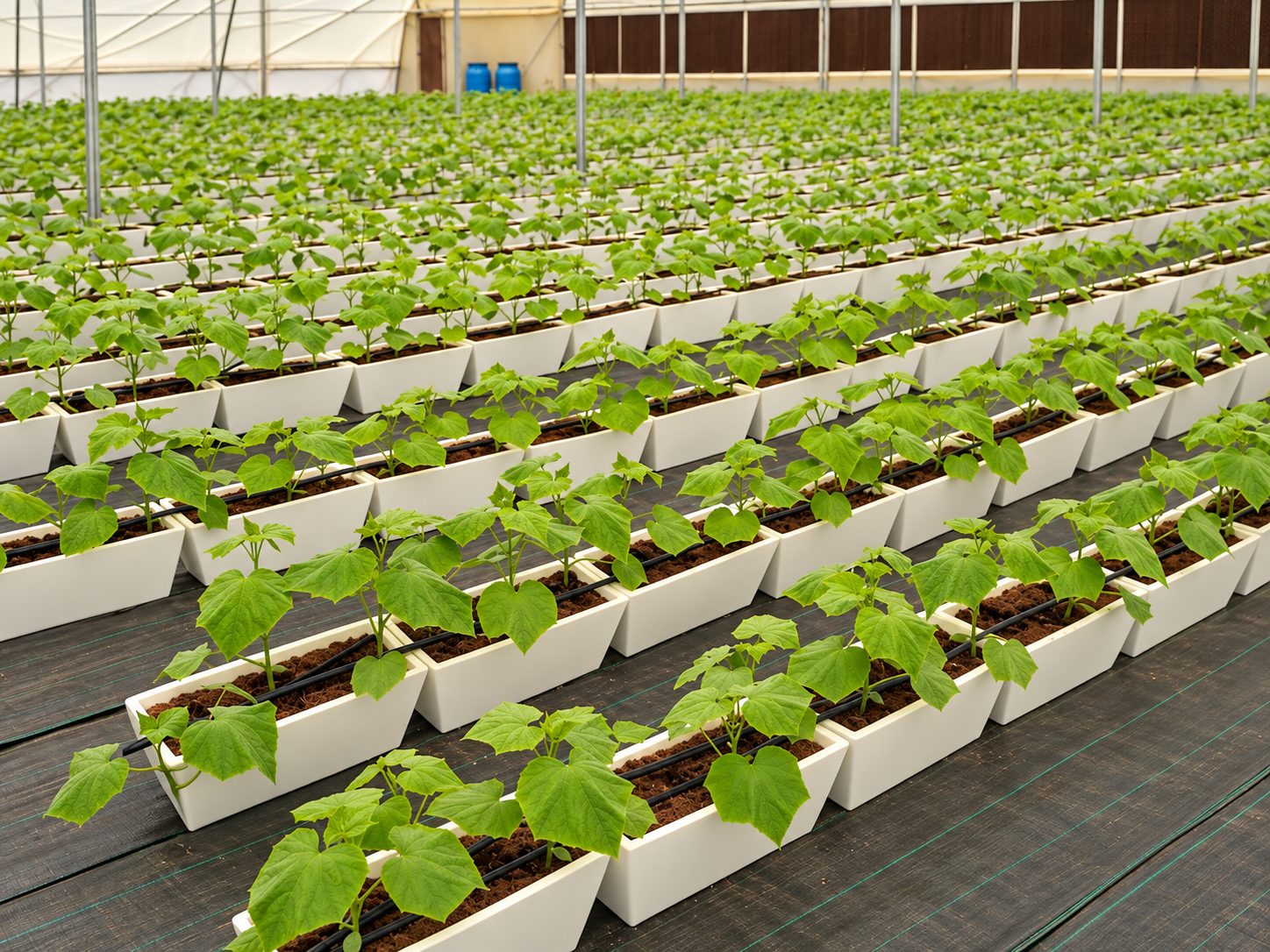
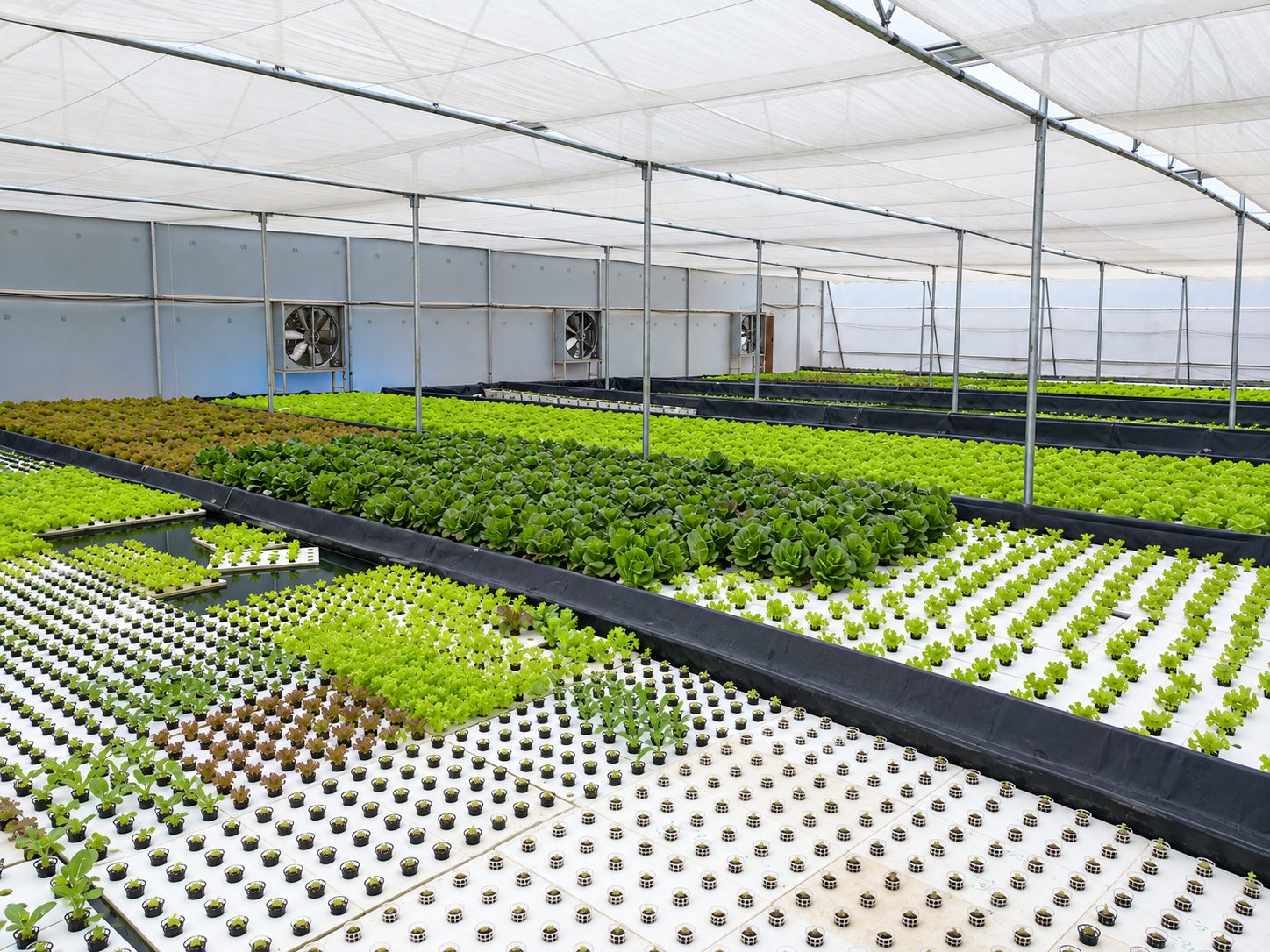
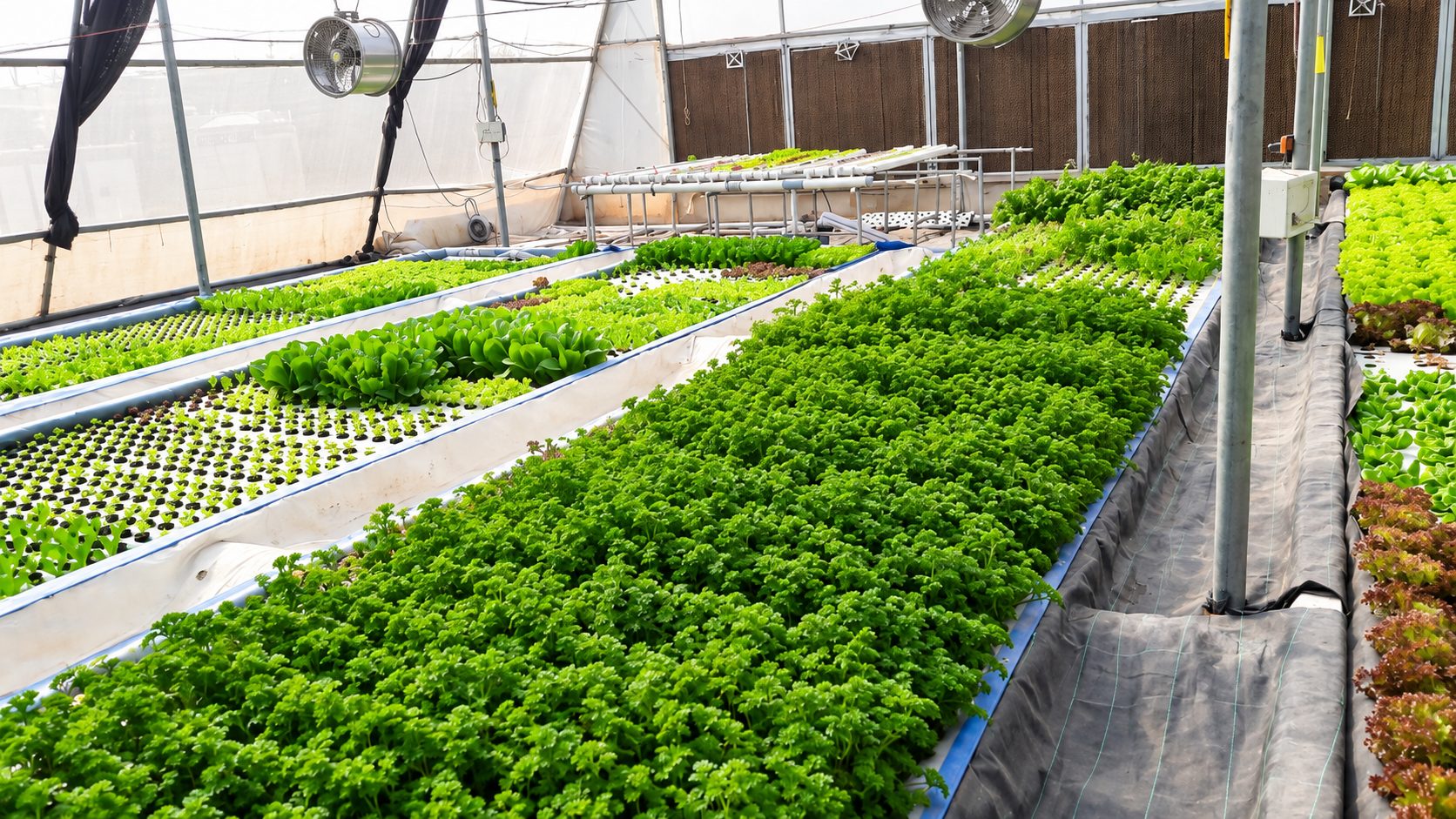
- Greenhouse hydroponics: crops grown in a protected structure, usually on one level, using sunlight, with cooling, ventilation and shading to manage the climate.
Both are hydroponic. The difference is where the light comes from.
Why electricity decides it
Plants need a lot of light. In a vertical farm, every photon comes from an LED you pay to run, and the heat those lights give off has to be removed by air-conditioning, which you also pay to run. That's why energy is the defining cost of indoor farms worldwide, and why some Indian vertical farmers are working on solar power to cut it.
A greenhouse gets its light free from the sun. India has some of the strongest sunlight of any major agricultural market. The challenge in a greenhouse is usually too much heat, not too little light, and shading and evaporative cooling deal with that far more cheaply than LEDs replace the sun.
Side by side
| Vertical farm | Greenhouse hydroponics | |
|---|---|---|
| Light source | LEDs | Sunlight |
| Electricity use | Very high | Moderate (pumps, fans, cooling) |
| Land use | Very low, stacked | Higher, mostly single level |
| Climate control | Total | Good, weather still matters |
| Crops | Microgreens, herbs, small leafy greens | Leafy greens, herbs, tomatoes, cucumbers, berries |
| Capital cost per sq ft | Very high | Lower |
| Best location | Inside or very close to cities | City edges and peri-urban land |
Where vertical farming makes sense
- Microgreens and specialty herbs that sell at very high prices in small volumes.
- Propagation rooms for raising seedlings before they go into a greenhouse.
- Sites where land is extremely expensive and customers are close by.
- Research and product development, where total control matters more than cost.
Where greenhouses win
For almost everything else: lettuce at scale, herbs for restaurants, cherry tomatoes, cucumbers and berries. Fruiting crops in particular are tall and light-hungry, which makes them a poor fit for stacked shelves.
Our view
We grow in greenhouses because, in Indian conditions, sunlight is the cheapest and most powerful input we have. We use technology to manage heat, water and nutrients rather than to replace the sun. That said, the right answer depends on your crop, your land cost and your power price. If you're weighing the options, talk to us, or read about hydroponic farming in India and farm automation.
Frequently asked questions
Is vertical farming profitable in India?
It can be for small, very high-value crops sold close to customers, such as microgreens. For most vegetables, the electricity cost of LED lighting and cooling makes greenhouse hydroponics cheaper per kilo in Indian conditions.
Is vertical farming the same as hydroponics?
Not exactly. Hydroponics is the soilless growing method; vertical farming is a way of arranging crops in stacked layers indoors. Most vertical farms use hydroponics, but most hydroponic farms are not vertical farms.
Can solar power make vertical farming viable?
Solar can cut electricity costs significantly, and some Indian vertical farms are working on it. It adds capital cost, though, and a greenhouse still uses sunlight more directly and cheaply for most crops.
Sources
Dhruv Khanna
NTU Singapore alumnus. Recognised by Forbes 30 Under 30 Asia (2019) and Forbes India 30 Under 30 (2020) for Triton's work on water-efficient hydroponics.
About Dhruv Khanna